
One day your calves look healthy, active, and growing exactly as expected. Then just a few days after weaning, something changes. Feed intake drops. Some calves start looking hollow through the flank. Growth slows down, body condition slips, and suddenly a group that looked promising starts moving backward.For many producers, this stage can be frustrating because post-weaning weight loss often happens fast and quietly.
The reality is simple. Calves do not lose weight after weaning because of one problem. It usually happens because stress, reduced feed intake, digestive adaptation, poor nutrition, and management challenges all hit at the same time.
The good news is that most post-weaning weight loss is preventable.
With better weaning management, strong cattle nutrition, clean water access, proper roughage, and a feeding strategy matched to the calf’s growth stage, producers can reduce stress and keep calves moving forward instead of falling behind.
Calves lose weight after weaning mainly because separation stress reduces appetite, feed intake drops sharply, and the digestive system must suddenly adapt from milk-based nutrition to solid feed.
When this transition is poorly managed, calves often experience slower growth, lower energy intake, reduced nutrient absorption, and temporary liveweight loss during the first week after separation.
Research and field experience both show that reduced dry matter intake after weaning is one of the main reasons calves lose liveweight during the early transition period.
After weaning, young Calves experience one of the biggest changes of their early development.
Within a short period, several major things happen at once.
That is a significant adjustment for any young animal.
Many newly weaned calves spend more time pacing fences, calling out, and searching for the cow instead of eating.This behavior creates the first major problem.
If intake stays low long enough, calves begin losing body condition surprisingly fast.The first few days after weaning often have the biggest long-term impact.
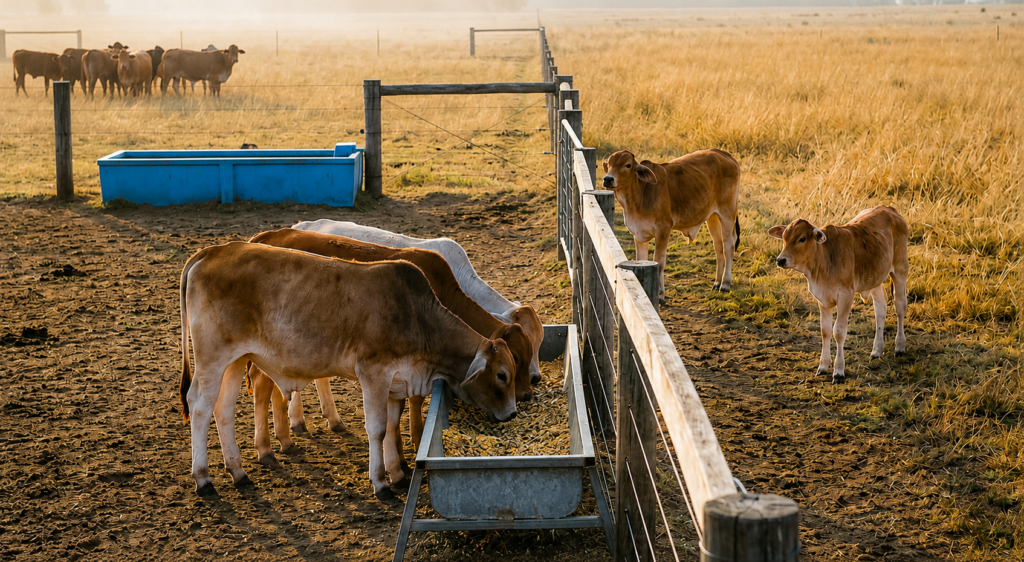
Stress is usually the biggest trigger behind weight loss.
When calves are suddenly separated, cortisol levels rise and behavior changes quickly.Instead of eating normally, calves often become restless.
Common signs include:
The longer stress continues, the longer growth remains interrupted.Even a short period of poor intake can affect overall performance.
Before weaning, milk provides a major part of nutrition.
This means poor feed utilization and slower growth.Calves introduced gradually to roughage and starter feed before weaning usually transition better.Digestive adaptation matters more than many producers realize.
A green paddock does not automatically mean calves are receiving proper nutrition.
This catches producers all the time.Pasture may appear abundant while lacking critical nutrients needed for growth.Problems usually come from:
The calf may continue eating but still fail to gain weight properly. Growth depends on nutrition quality, not simply feed quantity.
Calves do not adapt well to abrupt dietary changes.
A sudden shift from milk and pasture toward grain-based feeding programs can temporarily disrupt digestion.When feed changes happen too quickly:
Feed transitions should always happen gradually.The goal is steady adaptation.Not sudden force-feeding.
Not every calf competes equally.
In many groups, stronger calves dominate feeding areas while smaller animals struggle to access enough feed. Even when plenty of feed is available, weaker calves may still underperform. Watch closely during feeding.
Ask:
Sometimes the problem is not feed quality. Sometimes it is feed access.
Early detection prevents bigger losses.
Watch for these warning signs:
When these symptoms continue for several days, action should be taken immediately.
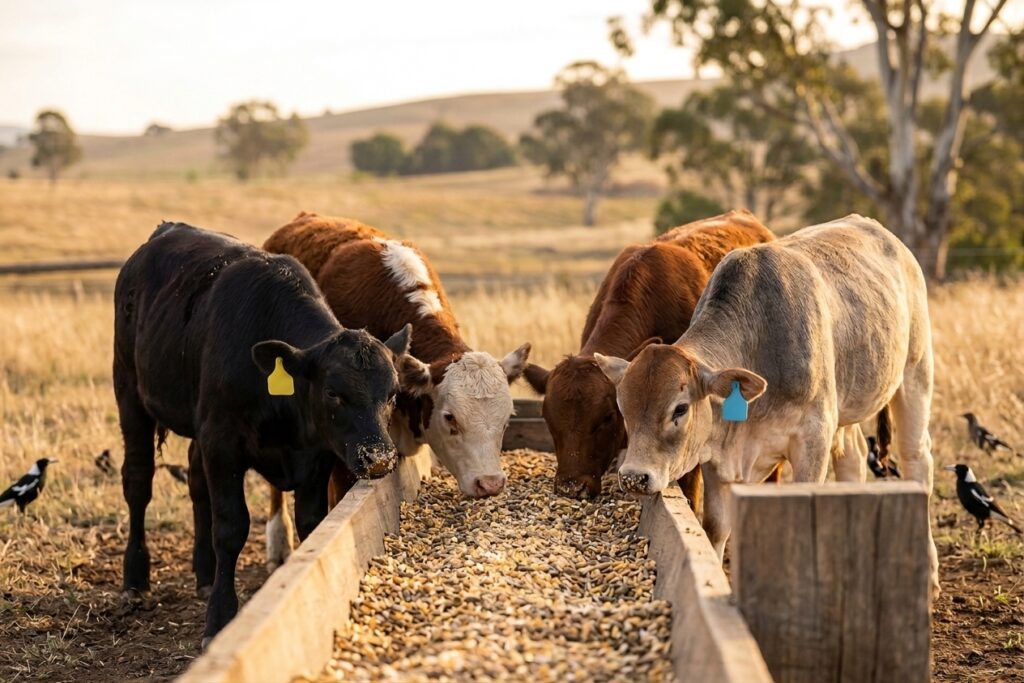
The best weaning programs begin before weaning day itself.
Calves should already recognize:
The fewer surprises calves face during weaning, the faster they settle.Preparation reduces stress significantly.
Roughage plays a major role in digestive stability. Good quality hay or pasture helps support rumen function while encouraging steady intake. Roughage also lowers the risk of digestive upset when concentrated feed is introduced.
Poor water intake often causes poor feed intake.Newly weaned calves should have instant access to clean water.
Never force sudden feed changes.If introducing grain-based feed or nutritional supplements, increase feed gradually over several days.
Slow adaptation protects digestion and improves confidence around new feed.Consistent intake always beats sudden changes.
Stress burns valuable energy reserves. Simple management improvements matter.
Focus on:
Calm calves recover faster. And calves that recover faster start eating sooner.
Nutrition after weaning should match both body weight and development stage. Feeding every calf exactly the same way often creates performance gaps.
A staged feeding approach usually works best.
In structured cattle nutrition programs such as the Maxwelton feeding pathway, producers often match feed according to growth stage.
The goal is not simply feeding more.It is feeding correctly for the animal’s current stage.
Visual checks help.But weight data tells the real story.Producers should monitor Average Daily Gain whenever possible.
Average Daily Gain shows whether calves are:
If calves are eating but performance remains poor, nutrition quality may still be lacking. Regular monitoring allows faster corrections before losses become expensive.
Use this simple checklist.
✔ Introduce solid feed before weaning
✔ Keep roughage available
✔ Provide clean water immediately
✔ Avoid sudden feed changes
✔ Reduce unnecessary stress
✔ Monitor smaller calves closely
✔ Group calves by size if needed
✔ Watch feed competition carefully
✔ Track weight gain consistently
✔ Adjust nutrition early if performance slips
Small management improvements create major long-term results.
Some calves lose noticeable liveweight during the first week after abrupt weaning, especially when stress reduces feed intake. Lower-stress weaning methods usually improve early performance.
Stress, separation anxiety, unfamiliar feed systems, and sudden dietary changes often reduce appetite immediately after weaning.
Most calves settle within a few days, although some take longer depending on nutrition, water access, handling quality, and environment.
Calves need clean water, roughage, balanced nutrition, and feed matched to their weight and development stage.
Yes. Extended periods of poor nutrition can slow development, reduce growth rate, and create costly long-term setbacks.
Calves lose weight after weaning mainly because stress reduces feed intake while the digestive system struggles to adapt to a completely new feeding pattern. Poor pasture quality, sudden diet changes, dehydration, and poor management can make this setback worse.
The solution is not complicated.
For advice on feeding rates, product selection, or choosing the right Maxi feed for your cattle program, contact Maxwelton Feed & Grain.
Phone:
Andrew Pauli: 0429 442 627
Alison Pauli: 0427 129 381
Email: admin@maxwelton.com.au
Location: 18 School St, Maxwelton, Queensland 4822